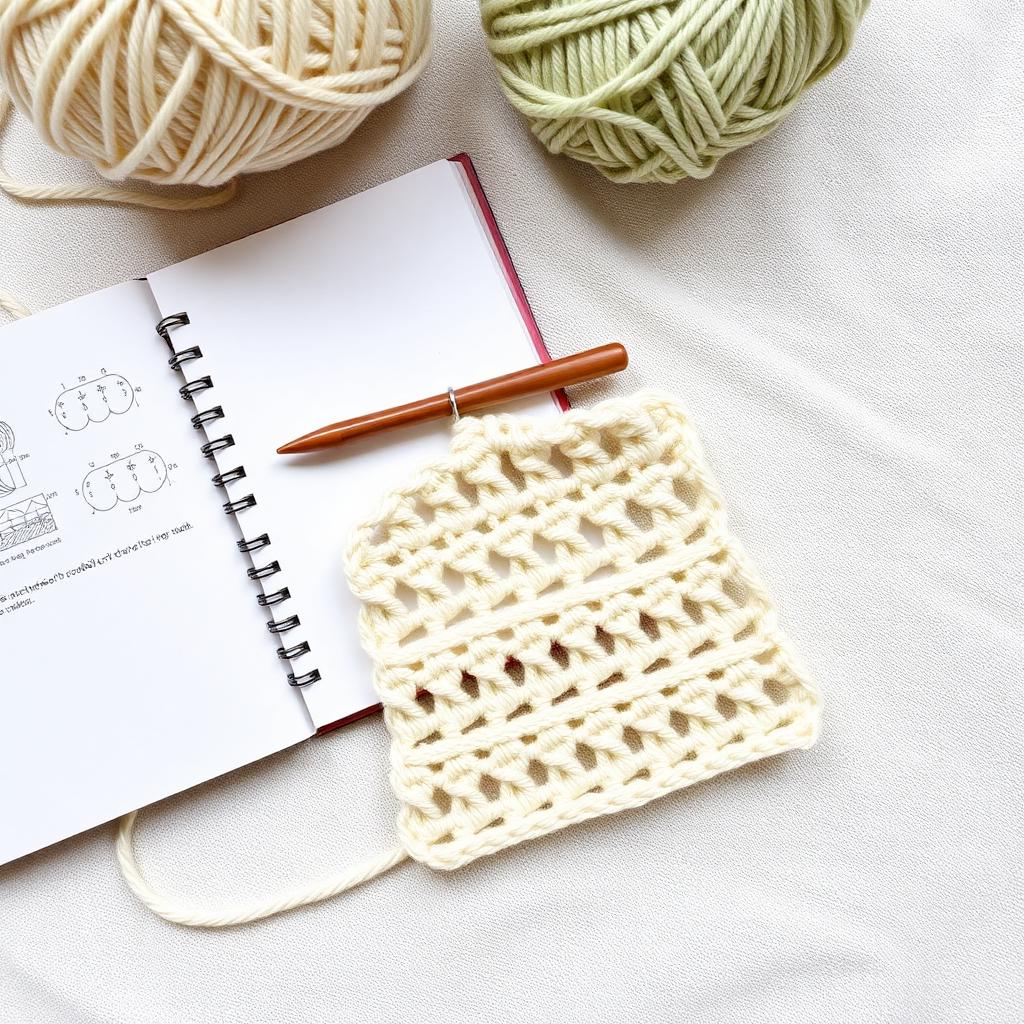
A written crochet pattern looks intimidating the first time you see one — 'Row 3: ch 3 (counts as dc), *dc in next 2 sts, 2 dc in next st; rep from * across, dc in last st, turn (25 dc)' — but it's really just a compact shorthand. Once you know the pieces, every pattern uses the same building blocks.
This guide breaks down every element of a standard written pattern, plus a short primer on charted patterns. By the end you'll be able to read almost any pattern published in English.
Every well-written pattern includes: a title, a designer name, a skill level, materials, gauge, abbreviations, finished size, special notes, the actual instructions, and finishing steps. Read them in that order before you cast on.
Gauge tells you how many stitches and rows the designer got over 4 inches (10 cm) using the specified yarn and hook. For blankets and scarves, gauge doesn't really matter — you'll just end up with a slightly larger or smaller finished piece. For hats, sweaters and anything fitted, gauge is everything. Make a gauge swatch of at least 5" x 5" and measure the middle 4".
Standardized shorthand for every stitch. Common ones: ch (chain), sl st (slip stitch), sc (single crochet), hdc (half double crochet), dc (double crochet), tr (treble crochet), st(s) (stitch/stitches), sk (skip), sp (space), rep (repeat), rnd (round). Every pattern should list its abbreviations at the top — check it before you start.
Repeats are the most confusing part of pattern reading for new crocheters, so let's slow down.
The asterisk marks the start of a repeated section. '*dc in next 3 sts, 2 dc in next st; rep from * across' means: do that whole sequence (dc 3, 2 dc in 1) over and over until you reach the end of the row.
Both group a set of stitches, usually with a number after telling you how many times to repeat them. '[dc, ch 1, dc] in next sp' means work all three of those stitches into the same space. '(dc in next 2 sts, sk 1 st) 4 times' means repeat that sequence exactly four times.
Some patterns nest brackets inside asterisks. '*dc in next st, [ch 1, sk 1 st, dc in next st] 3 times; rep from * 5 more times' means: within each asterisk repeat, work the bracketed section three times. Trace it out with a pencil on paper the first time — it always makes sense on the second read.
The number in parentheses at the end of a row is your stitch count. Always check it before starting the next row. Off by one? Rip back and find your missed stitch now — it's much worse to fix ten rows later.
Turning chains are the little chains at the start of each row that give height to the next stitch. Sc uses ch 1 (usually doesn't count as a stitch), hdc uses ch 2 (usually doesn't), dc uses ch 3 (usually counts as a stitch). Whether the turning chain counts as a stitch is the single most common source of stitch-count errors. Read the pattern's special notes carefully — the designer will tell you.
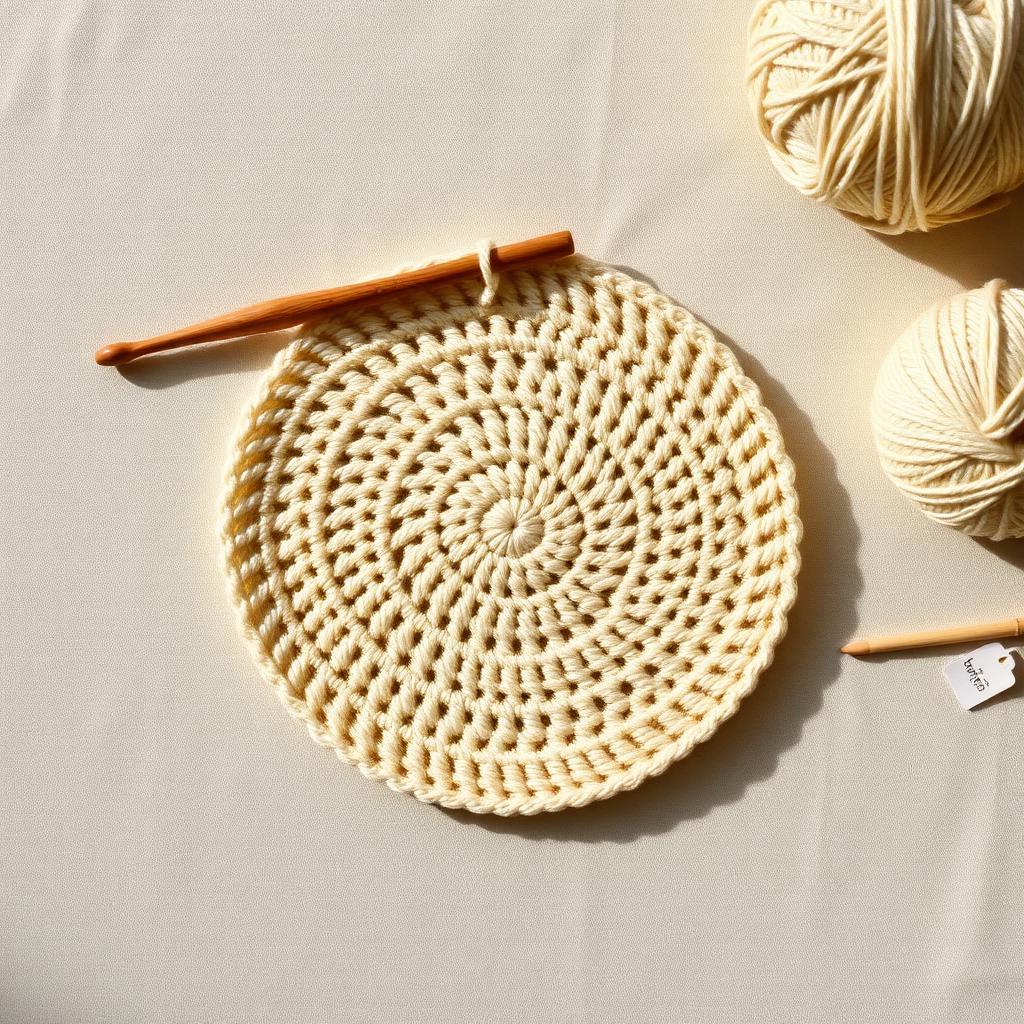
Rows: work across, turn, work back. The right side of your fabric alternates as you go. Rounds: work in a continuous circle or spiral, usually without turning. Round-based patterns typically start with a magic ring or a small chain joined into a circle, and every round begins with a stitch marker in the first stitch so you can count.
Some patterns — especially European designs, doilies and complex stitch-pattern swatches — are given as symbol charts rather than written text. Each stitch has an internationally standardized symbol: a small vertical line is a chain, an X is a single crochet, a T with one crossbar is a half double, and so on.
Charts read from the bottom up, right to left on right-side rows and left to right on wrong-side rows. Motifs worked in the round read from the center outward. The upside of charts: once you know the symbols, you can read a pattern in any language. The downside: they take practice.
This trips up almost everyone at least once. The two systems use the same names for different stitches:
- US single crochet (sc) = UK double crochet (dc)
- US half double crochet (hdc) = UK half treble crochet (htr)
- US double crochet (dc) = UK treble crochet (tr)
- US treble crochet (tr) = UK double treble crochet (dtr)
The pattern should state which system it uses in the header or notes. If it doesn't, look at the abbreviations: if you see 'sc' anywhere, it's US. If the smallest stitch listed is 'dc', it's probably UK.