Easy Crochet Projects for Beginners (10 Makes You Can Finish This Week)

Ten genuinely easy crochet projects that use only chain, single and double crochet — with realistic times, yarn amounts and the tiny fixes that keep beginners from quitting.

14 min read Updated July 23, 2026 By Mira Holloway
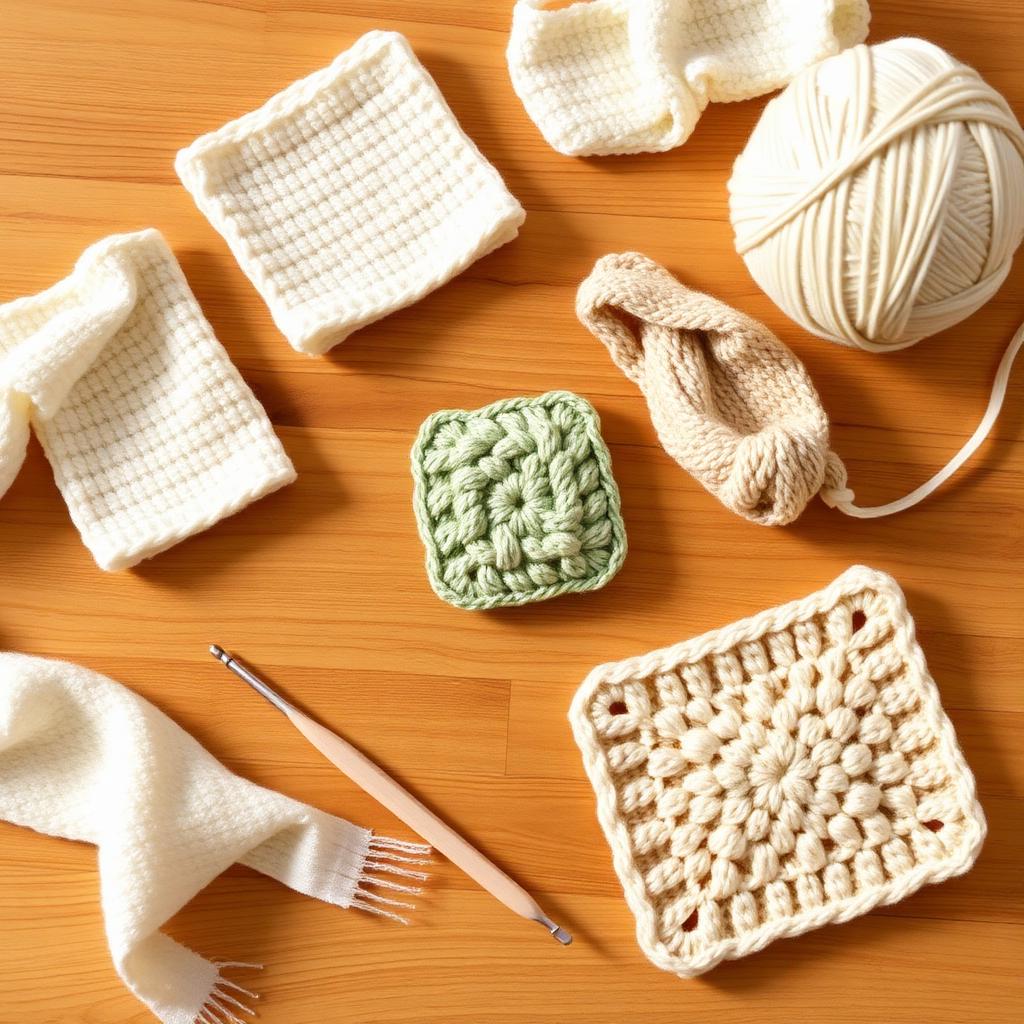
Flat lay of easy beginner crochet projects — cream washcloth, sage granny square, beige headband and cotton yarn on a wooden table
Materials
  • Worsted-weight (medium / #4) cotton or acrylic yarn — one skein per small project
  • 5.0 mm (US H/8) or 5.5 mm (US I/9) crochet hook
  • Tapestry needle and sharp scissors
  • Stitch markers (a paperclip works)
Crochet abbreviations
  • chchain
  • sl stslip stitch
  • scsingle crochet
  • hdchalf double crochet
  • dcdouble crochet
  • st(s)stitch(es)

Every beginner asks the same question: what should I make first? The honest answer is anything small, flat and useful. Small keeps you finishing. Flat keeps the pattern readable. Useful keeps you motivated to actually weave in the ends.

The ten projects below use only the stitches from our beginner stitch guide — chain, slip stitch, single crochet, half double crochet and double crochet. None of them need shaping, seaming, or fancy joins. Every one can be finished in a weekend, and most in an evening.

Before you start
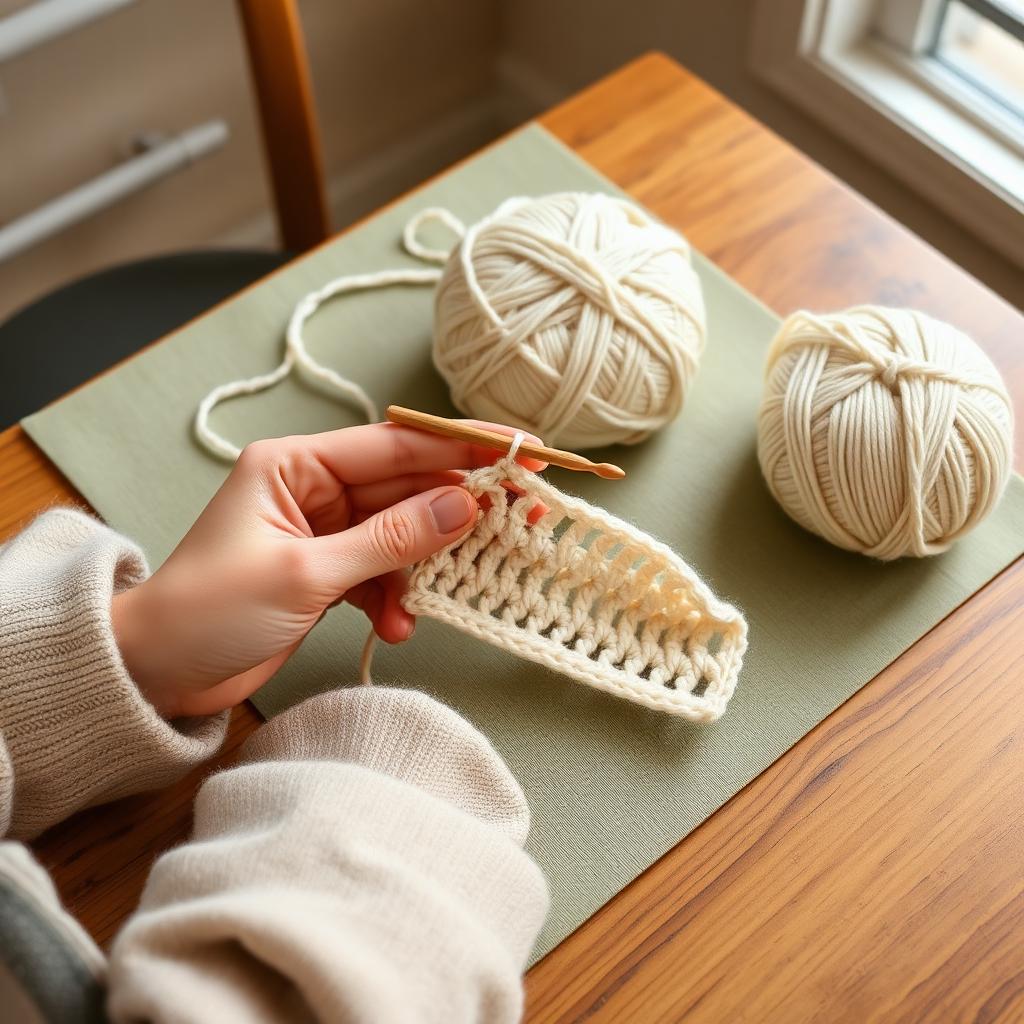
If you can chain 20 stitches evenly and work five rows of single crochet without losing count, you're ready for everything on this list. If not, spend 30 minutes on a practice swatch first — it saves hours later.

1. Cotton washcloth

The classic first project for a reason. One skein of cotton yarn, one hook, one evening. You end up with something you'll actually use every day, which is genuinely motivating.

Chain 26. Single crochet in the second chain from the hook and every chain across (25 sc). Chain 1, turn. Work 25 sc across every row until the piece is square — usually 25–28 rows depending on your tension. Fasten off, weave in ends. That's it.

2. Coaster set (four coasters)

The washcloth pattern, smaller. Chain 14, work 13 sc across, 13 rows tall. Four of these use less than half a skein and make a legitimately nice housewarming gift.

3. Chunky headband

Chain 9, work half double crochet across (8 hdc), keep going until the strip fits snugly around your head with about an inch of stretch to spare. Fold in half, sew the short ends together with a tapestry needle. Done in an hour.

4. Simple striped scarf

Chain 25, work double crochet across (23 dc plus the turning chain). Change color every 6 rows. Keep going until it's around 60 inches long. Double crochet builds fast — most people finish this in three or four evenings.

5. Market bag

Sounds harder than it is. Work a flat circle of double crochet for the base (chain 4, join, work rounds of increasing dc), then stop increasing and work straight up the sides in a simple mesh pattern (dc, ch 1, skip 1, repeat). Two handles of chain stitches at the top and you have a bag.

6. Granny square (single square)

Every crocheter should know one granny square. It teaches working in the round, corner spaces, and color changes in one small project. Follow our classic granny square walkthrough — six rounds and you're done.

7. Mug cozy

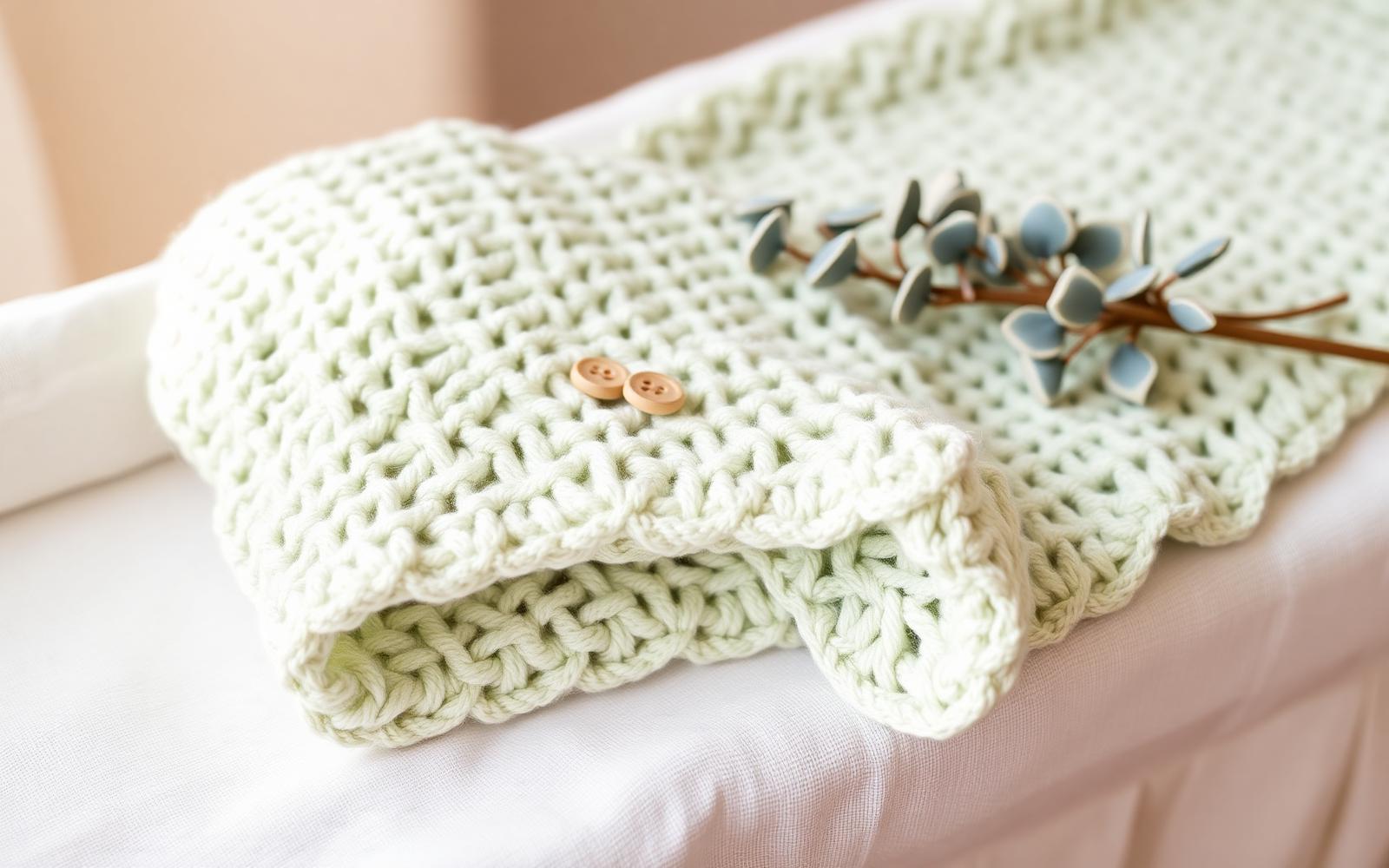
A short strip of single crochet (chain 11, work 10 sc across, about 20 rows) with a button loop on one end and a button on the other. Fifteen minutes of stitching, ten minutes of finishing.

8. Baby blanket in half double crochet

The most forgiving blanket you can make. Chain 100, work hdc across, keep going until it's square. Half double crochet has more drape than single and less holey-ness than double — perfect middle ground. Add a simple single-crochet border to finish.

9. Plant hanger

Three long chains braided together at the top, joined at the bottom to cradle a small pot. Uses macramé principles but is entirely crochet — a good bridge project into working in three dimensions.

10. Ear-warmer with a twist

Same as the chunky headband, but before sewing the ends together, give one end a half twist. It creates a soft gathered look at the seam and makes the finished piece feel more designed than it is. Ten-minute upgrade for a one-hour project.

What to skip as a beginner

Anything with lots of colors carried on the back (tapestry crochet), anything worked in fingering-weight yarn on a tiny hook, and anything that says 'shape as follows' before you've done ten flat projects. Amigurumi is fun but genuinely harder than it looks — build stitch confidence first.

How to know you're actually ready to level up

You've finished at least five of these projects. Your rectangles stay rectangular. You can read a simple pattern without stopping every line. When that happens, move on to shell stitches, working in the round for amigurumi, or your first garment — a simple crop tank is a great next step.
Project tips from the studio

  • Pick cotton over fuzzy yarn for your first three projects — you can actually see each stitch, so mistakes are obvious and easy to fix.
  • Count stitches at the end of every row for the first ten rows. Ninety percent of beginner drift comes from missing the last stitch of the row or working two into the turning chain.
  • Finish one small project before starting the next. A stack of half-done squares kills momentum faster than any hard technique.
  • Weave in ends as you go, not at the end. It takes 30 seconds per color and turns finishing from a chore into a non-event.

Troubleshooting

My rectangle is turning into a trapezoid.
You're either adding a stitch at the start of each row (working into the turning chain when you shouldn't) or losing the last stitch. Recount after every row until edges stay straight.
The edges are curling.
Normal for tight single crochet. Either go up one hook size, switch to half double crochet, or add a simple single-crochet border once you finish — all three fix it.
My stitches look tight and my hand hurts.
You're gripping. Loosen your yarn hand, sit back from the work, and go up half a hook size. Beginners nearly always crochet too tightly.

Frequently asked questions

What's the easiest crochet project for a total beginner?+

A cotton washcloth. It's one stitch (single crochet), one row repeated, and the finished object is genuinely useful. If you can chain and single crochet, you can make one in an evening.

How long does it take to make an easy crochet project?+

Most projects on this list take one to four hours of actual stitching. A washcloth or coaster is one sitting; a scarf or baby blanket spreads across several evenings.

What yarn should a beginner use?+

Worsted-weight cotton in a light solid color. You can see every stitch clearly, it doesn't split, and mistakes are easy to spot and rip back. Avoid black, fuzzy yarns and anything variegated for your first few projects.

Do I need a pattern to start?+

For anything shaped, yes. For a flat rectangle — washcloth, scarf, blanket — you just need to know your stitch count and how to keep the edges straight. Chain your starting number, work your stitch, and repeat until it's the size you want.

Why do my beginner projects always come out wonky?+

Almost always one of three things: gaining or losing stitches at the row edges, working into the turning chain when you shouldn't, or wildly uneven tension. Count stitches every row and the wonkiness disappears within a week of practice.

Sources & content review
This article was written by our editorial team and reviewed against our editorial policy. All techniques are tested in our studio, and craft-terminology definitions cross-checked against the Craft Yarn Council standard yarn weight system and CGOA glossary.