Crochet is one of the friendliest crafts to pick up as an adult. You need one hook, one ball of yarn, and about fifteen minutes to make a first row of stitches — and unlike knitting, you're only ever working one live loop at a time, which means dropped stitches don't unravel your whole project.
This guide is the version I wish someone had handed me the week I started. It covers the tools worth buying (and the ones to skip), the four stitches that will carry you through almost every beginner pattern, and the small mistakes worth knowing about now so you don't spend three weeks fighting them.
You can start crocheting for under $15. Do not buy a beginner kit with twenty hooks and every color of yarn — you'll use one hook and one yarn for months. Get a single 5.5 mm or 6.0 mm hook, one 100-yard ball of light cream or beige worsted cotton, small scissors, and a tapestry needle. That's it.
Two brands I recommend without hesitation for your first hook: Clover Amour (ergonomic rubber grip, smooth aluminum shaft) and Furls Streamline Wood (heavier, warmer in the hand). Both are around $10–$20. Skip the giant metal-hook multipack — cheap hooks have burrs that snag yarn.
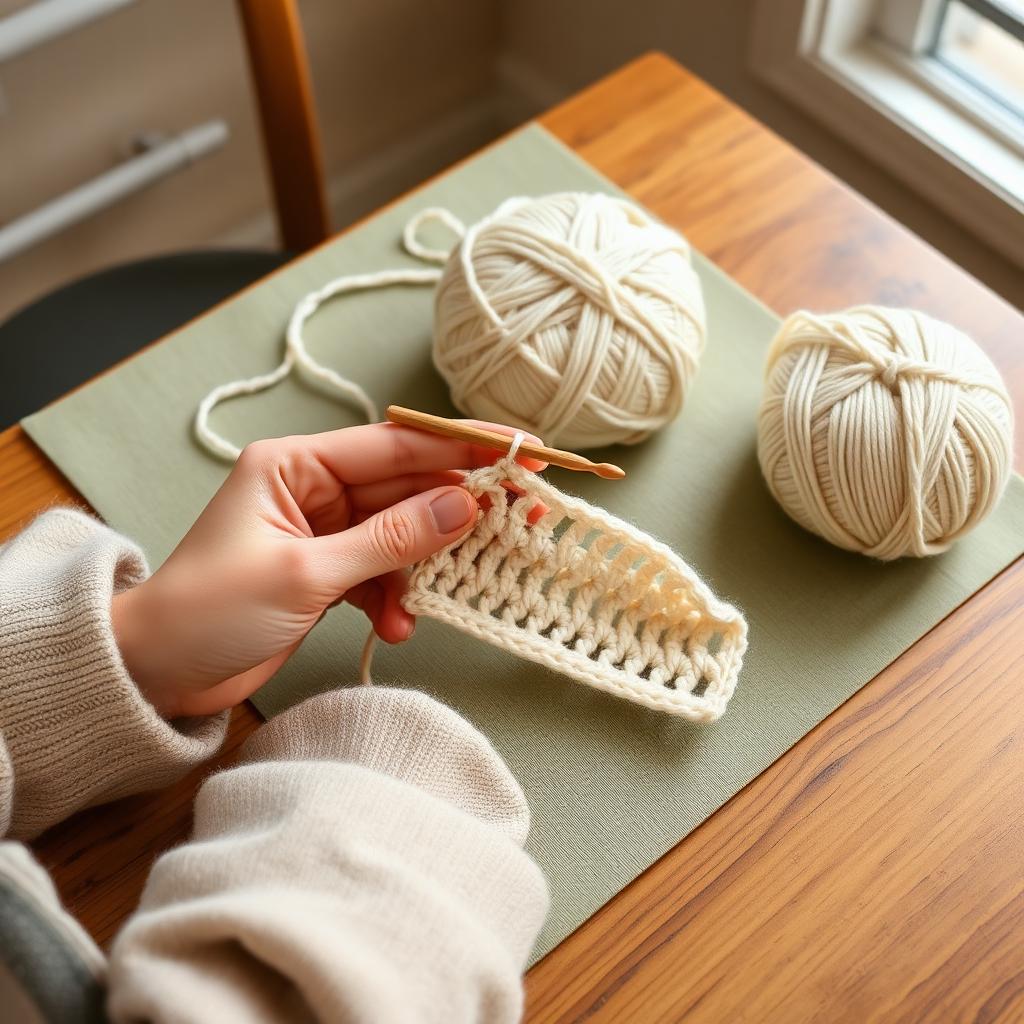
There are two common hook grips: the knife grip (over the top, like holding a butter knife) and the pencil grip (from underneath, like holding a pen). Neither is right or wrong — try both for ten minutes each and go with whichever feels less strained. Most crocheters end up with the knife grip because it's easier on the wrist for long sessions.
For yarn tension, the working yarn wraps around your non-dominant hand's little finger, up and over the index finger. The index finger is doing all the work — it acts as a live tension controller. If your fabric is too tight, loosen your grip on the yarn between little finger and palm. If it's too loose and floppy, tighten it slightly. It takes about a week to feel natural.
The foundation of nearly every project. Yarn over, pull through the loop on your hook. Repeat. That's it. Aim for chains that all look the same size — think of the loop shape as a small oval, not tight and twisted. Practice a chain of 20, then rip it out and do another. You'll feel your tension settle within a few tries.
Insert hook into stitch, yarn over, pull through (2 loops on hook), yarn over, pull through both loops. Single crochet makes a dense, sturdy fabric — perfect for amigurumi, dishcloths and market bags. It's also the first stitch most patterns assume you know.
Yarn over, insert hook, yarn over, pull through (3 loops on hook), yarn over, pull through all 3 loops. Hdc is my favorite stitch for beginners — it's taller than sc, so projects grow faster, but it still gives you a firm, warm fabric perfect for hats and scarves.
Yarn over, insert hook, yarn over, pull through (3 loops), yarn over, pull through 2 loops, yarn over, pull through the last 2 loops. Double crochet is the workhorse of blankets, granny squares and lacy patterns. It grows twice as fast as single crochet and gives you a lighter, more drapey fabric.
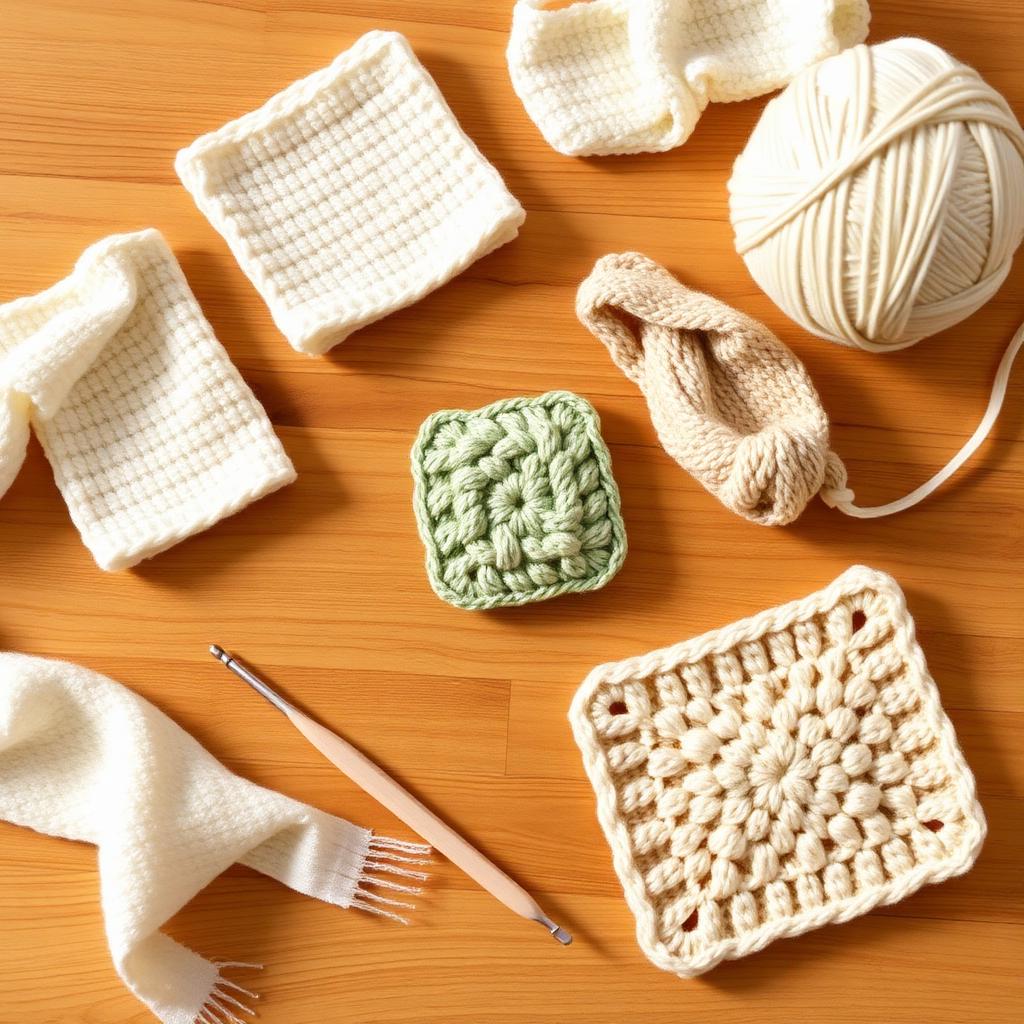
Don't start with a scarf. Everyone tells you to start with a scarf and it's terrible advice — a scarf is 400 rows of the same stitch, which is boring, and it lets small tension mistakes accumulate into a wavy, sad rectangle. A cotton washcloth is 20–25 rows, teaches you the exact same skills, and gives you something genuinely useful in one evening.
Simple washcloth pattern: chain 26. Row 1: single crochet in the second chain from the hook and every chain across (25 sc). Row 2: chain 1, turn, single crochet in every stitch across (25 sc). Repeat row 2 until the piece is roughly square, about 23–25 rows. Fasten off, weave in ends. Done.
- Working into the wrong loop of the foundation chain. Aim for the 'V' bumps on the back of the chain — it makes a much cleaner starting edge.
- Skipping the turning chain, or counting it as a stitch when the pattern says not to. Every pattern is explicit about this; read it carefully.
- Ignoring gauge on your first fitted project. Blankets don't care about gauge. Sweaters and hats absolutely do.
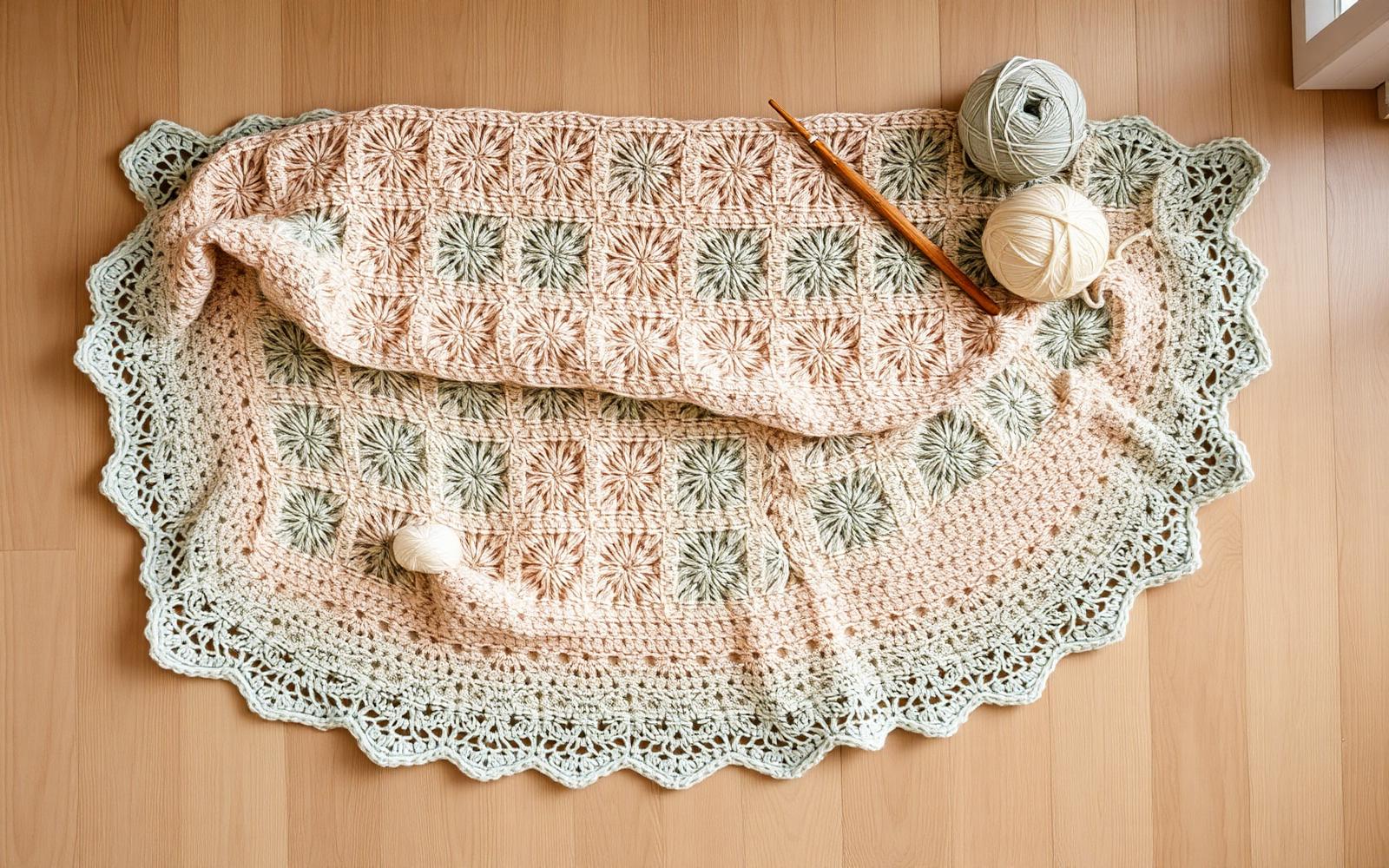
- Starting a giant project first. A blanket is 40+ hours of work — if you burn out, you may never come back to it. Small projects build momentum.
- Comparing your first month to someone's five-year Instagram feed. Everyone's early work is uneven. That's how it should look.
Once your washcloth is done and you feel confident with single crochet, try a granny square — it introduces working in the round and color changes, both foundational skills. From there, a simple scarf in half double crochet, then a beanie, then your first sweater. Most crocheters go from absolute beginner to a first sweater in around six months of casual practice.