There are hundreds of crochet stitches with elaborate names, but almost every pattern you'll ever meet is built from a small core of ten. Learn these ten well and you can walk into any pattern — from a granny square to a lace shawl — and understand what's happening on the page.
This guide is written for US crochet terminology, which is the standard in most English-language patterns. If you're following a UK pattern, the same names refer to different stitches (US 'single crochet' is UK 'double crochet') — always check the pattern's key first.
Before you start
Grab a light-colored worsted-weight cotton and a 5.5 mm hook. Cotton doesn't split, doesn't fuzz, and shows the stitch structure clearly. You'll learn faster with the right materials than you will powering through with dark eyelash yarn.
The chain is where every crochet project begins and where every stitch is measured from. It's a loop pulled through a loop — the whole craft distilled.
Slip knot on your hook, yarn over, pull through. That's one chain. Do it fifteen more times and check: your chain should look like a row of little Vs, all facing the same direction, with a bump running along the back. That back bump is where you'll insert your hook on row 1 of most patterns.
Common mistake: counting the loop on the hook as a chain. It isn't. If a pattern says 'chain 20,' you want 20 V-shaped chains below the loop that's still on your hook.
The shortest stitch and the workhorse of joining. It has almost no height, so it disappears into the fabric — perfect for closing a round, moving your yarn along an edge, or seaming two panels together.
Insert hook into the stitch, yarn over, pull through the stitch AND the loop on your hook in one motion. Done.
Where it shines: joining the last stitch of a round to the first, invisible seams on amigurumi, and creating a smooth top edge on a hat brim.
The densest, sturdiest common stitch. Amigurumi, dishcloths, market bags — anything that needs to hold shape is probably single crochet.
Insert hook into the next stitch, yarn over, pull up a loop (two loops on hook), yarn over, pull through both loops. One single crochet made.
The fabric it creates is tight and slightly stiff, with almost no drape. It curls in one direction until blocked — that's the stitch, not you.
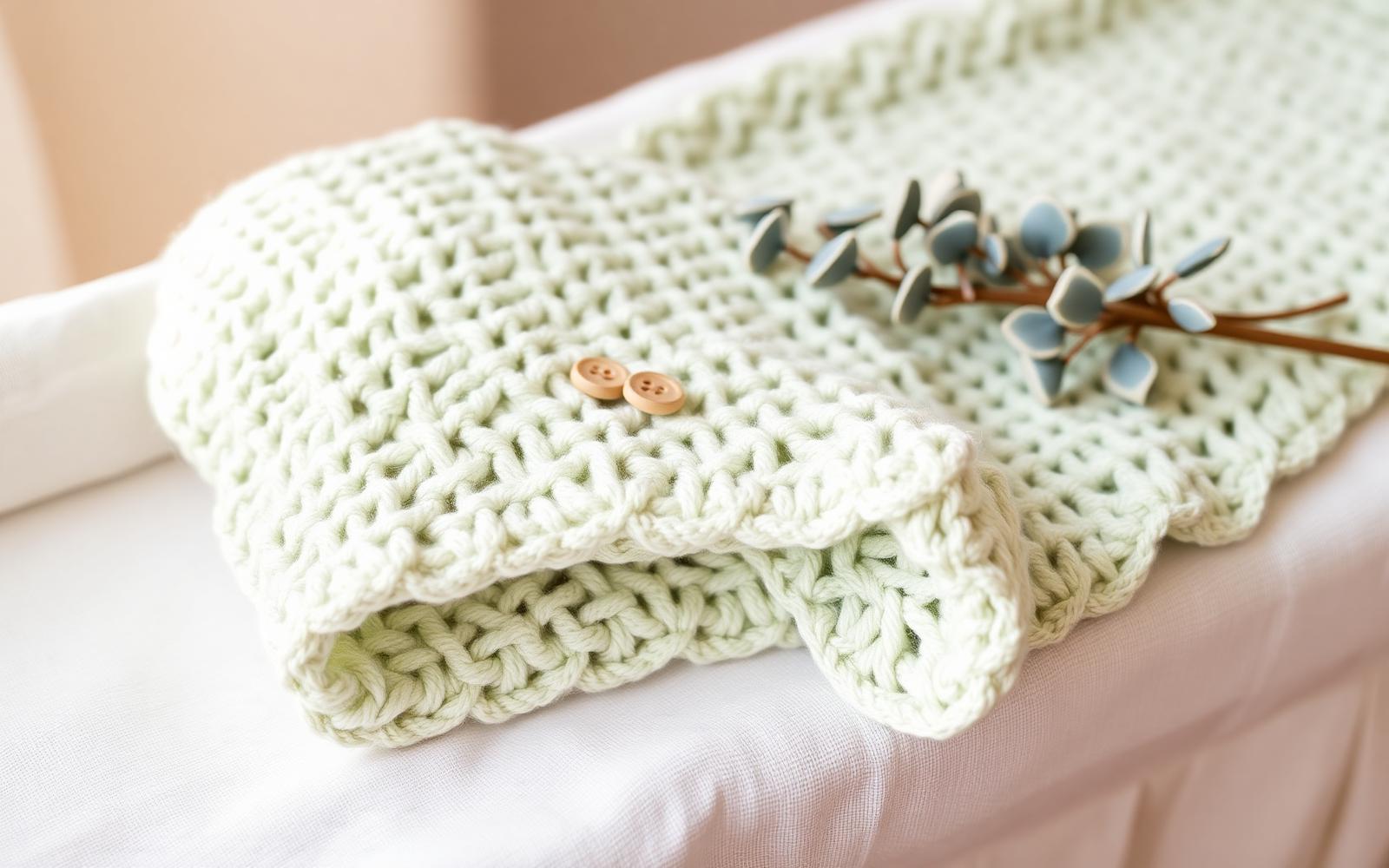
The most underrated stitch in crochet. Taller and softer than a single crochet, denser than a double — it hits a sweet spot for hats, cowls, sweaters and blankets that need a bit of drape without any gaps.
Yarn over first, then insert hook into the next stitch, yarn over again, pull up a loop (three loops on hook), yarn over, pull through all three loops.
If you find dc fabric too gappy for a garment, swap in hdc and see the difference. Winter hats especially benefit.
The most common stitch in the pattern world. Fast, tall, has natural drape, and forms the basis of granny squares, ripple blankets and most shawls.
Yarn over, insert hook, yarn over, pull up a loop (three loops on hook), yarn over, pull through two loops (two loops on hook), yarn over, pull through the last two loops.
Turning chain: at the end of the row, chain 3 before turning. That counts as your first dc of the next row in most (but not all) patterns — read the specific pattern's rules.
A tall, open stitch used mainly for lacework, shawls and openwork edgings where you want lightness and drape.
Yarn over twice, insert hook, yarn over, pull up a loop (four loops on hook). Yarn over, pull through two — three times. Turning chain is 4.
Treble stitches create obvious gaps between posts, which is why they're used in filet crochet and mesh patterns rather than fabric that needs to be warm or opaque.
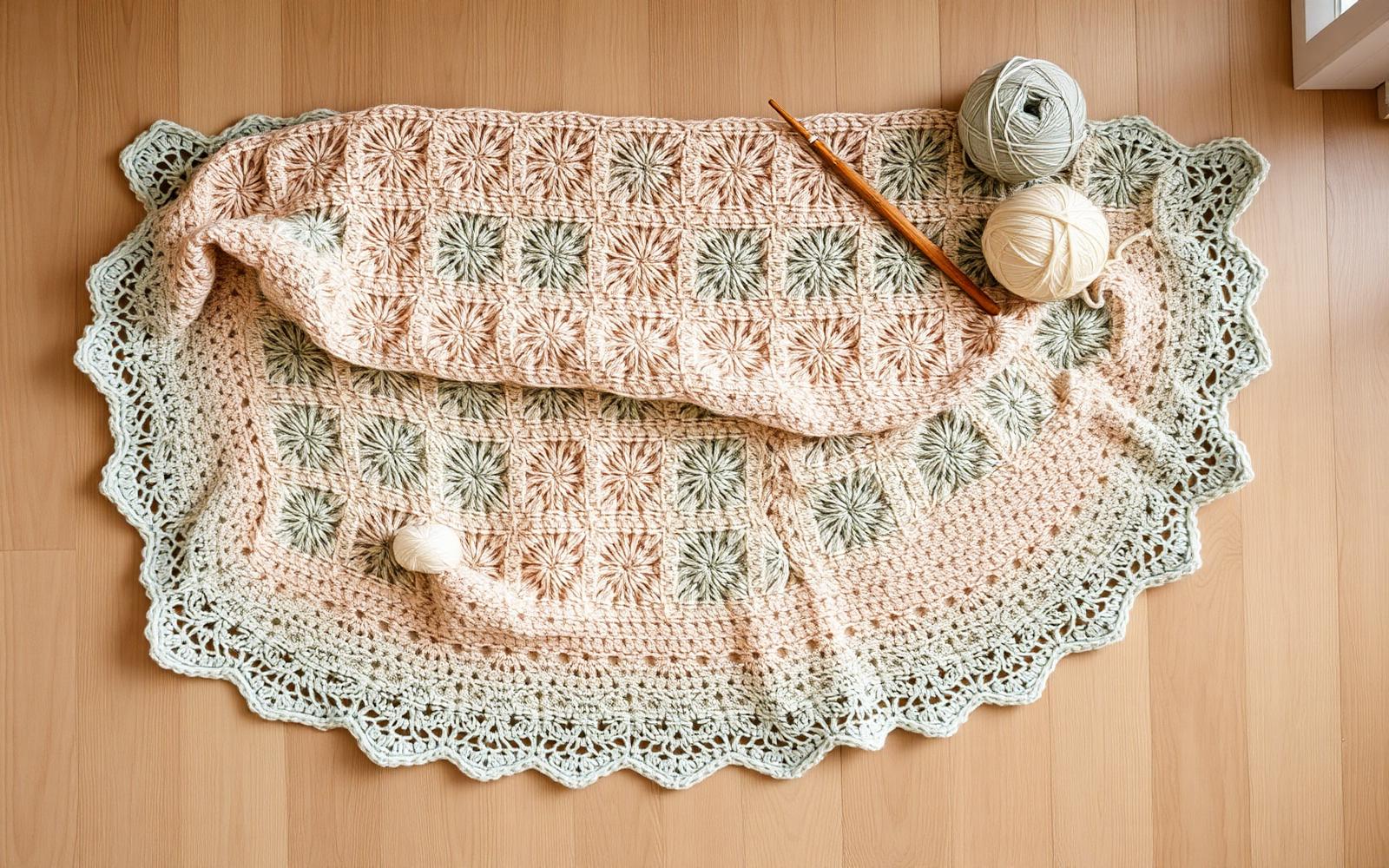
Not a base stitch but a combination — usually 5 dc worked into one stitch, with skipped stitches on either side. The fan shape gives crochet its classic scalloped look and forms the basis of countless baby blankets and vintage patterns.
Try this: chain a multiple of 6, plus 1. Row 1: sc in second ch from hook, *skip 2, 5 dc in next ch, skip 2, sc in next ch*, repeat across.
Two dc worked into the same stitch with a chain between them, creating an open V that repeats across a row. Airy, quick, ideal for spring cardigans and lightweight blankets.
Pattern: (dc, ch 1, dc) all in the same stitch, skip 2 stitches, repeat.
Not stitches themselves but a technique modifier. Every stitch has two loops on top forming a V; working only through the front or the back loop leaves the other loop as a visible horizontal ridge.
Back loop only single crochet creates a stretchy, ribbed fabric perfect for hat brims and sock cuffs. Front loop only creates a subtler ridge, used decoratively in home-decor pieces.
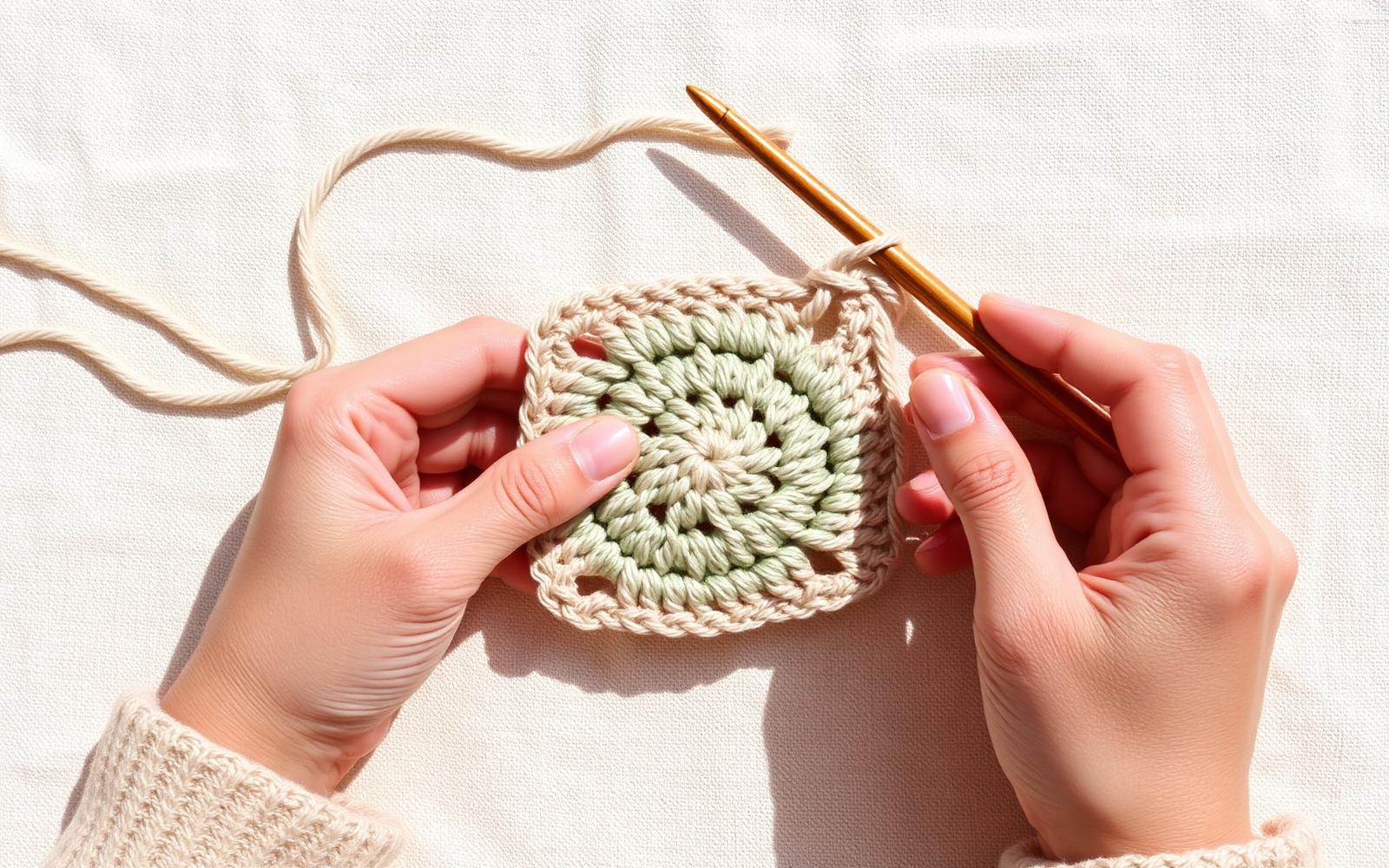
Not a stitch, but the start-of-round technique that separates 'I've read a tutorial' from 'I make amigurumi.' Instead of chaining a small circle (which leaves a hole in the center), you loop the yarn around your fingers, crochet your first round into the loop, and then pull the tail to close the center completely.
It takes ten minutes to learn from a video and it's the single technique that most improves the finish of round motifs and stuffed toys.
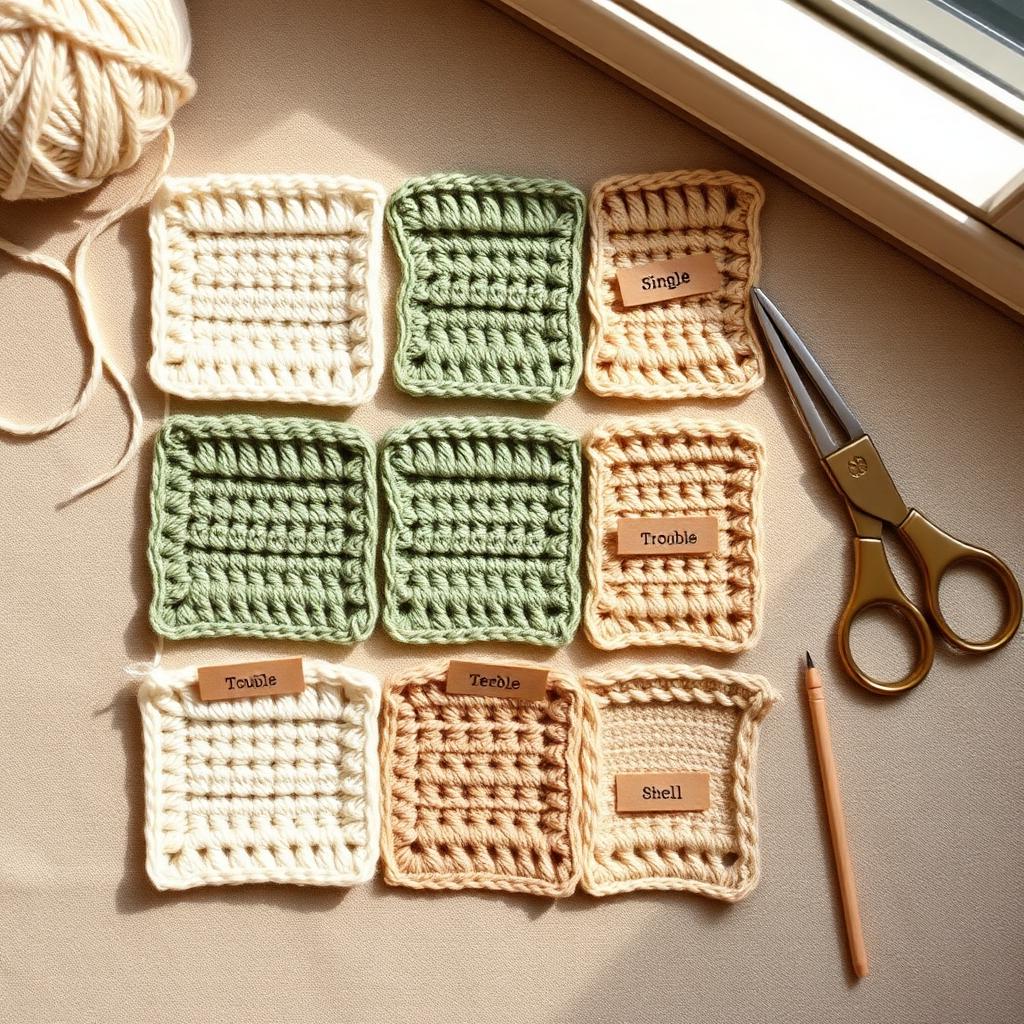
- Chain 20 in a light cotton and work 10 rows of each stitch, starting with single crochet.
- Label each swatch with the stitch name and hook size on a pinned index card and photograph it. Save the photos in one folder — this is your personal stitch dictionary.
- Once you've worked all ten in isolation, make a sampler blanket: 6-inch swatches of each, joined with slip stitch and edged with a hdc border. It's the classic learning project for a reason.
This trips up almost every crocheter working from an international pattern once. The stitches are the same; the names shifted.
- US single crochet = UK double crochet
- US half double crochet = UK half treble crochet
- US double crochet = UK treble crochet
- US treble crochet = UK double treble crochet
If a pattern doesn't state which terminology it uses, look at the abbreviations key. A pattern using 'dc' as its shortest common stitch is UK terminology; a pattern with 'sc' and 'dc' is US.