Iran’s already collapsing economy is now headed for complete collapse after weeks of war. Food prices are rising not only daily but hourly, with some foods increasing by at least 50 percent compared to pre-war levels.
At the same time, the interruption of internet access has stopped many services. Factories and manufacturing facilities are facing a severe shortage of raw materials, and the country’s infrastructure has been severely damaged. “It is no longer possible to bear this situation,” said a resident of Tehran.
According to figures provided by government-related organizations and other economists, more than 40% of the population now live below the absolute poverty line, and that number exceeds 50% in the capital. Economists warn, however, that the actual poverty rate may rise above 60% nationwide. As the middle class has collapsed, the gap between those earning less than 50 million tomans a month (about $320) and those earning more than 200 million tomans a month (about $1,280) has widened.
However, in most occupations, the average monthly salary of workers and skilled workers in Tehran does not exceed 25 million tomans (about $160), which means that many fall below the poverty line, which economists say will need at least twice that amount to maintain basic living standards.
This comes as the Persian New Year — when Iranian families traditionally increase spending on food, clothing and entertainment — often triggers seasonal price increases. However, this year, those pressures have increased significantly under wartime conditions.
Last year, 180 Iranian economists issued a warning about the coming economic collapse caused by deflation and monetary policies, especially exchange rates that provide special access and rent to state-linked institutions, including the Islamic Revolutionary Guard Corps (IRGC).
4 Check out the gallery
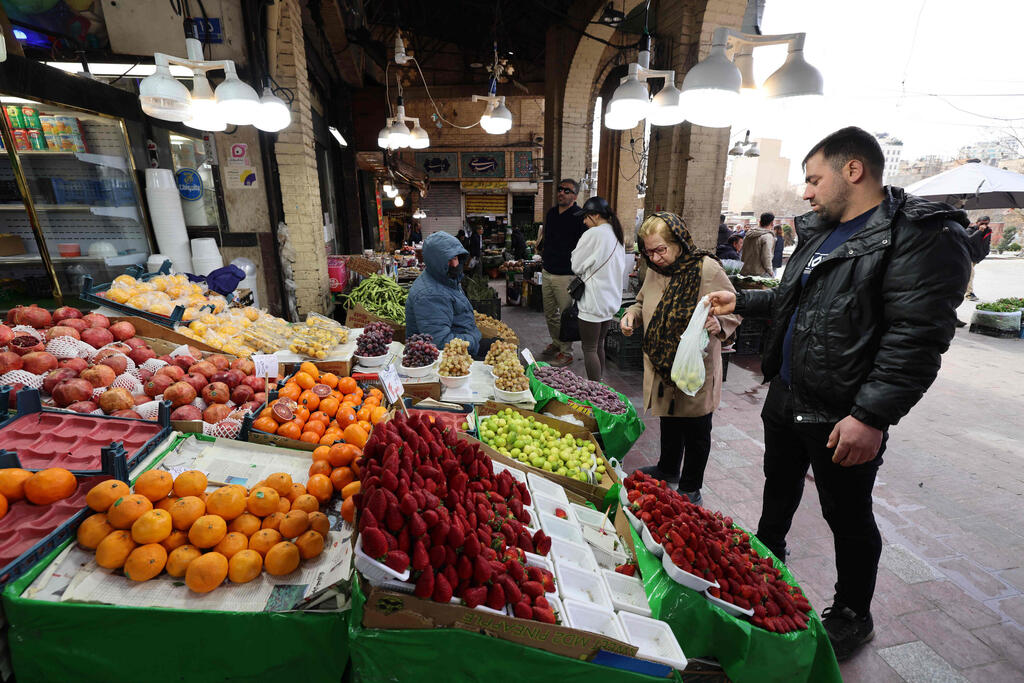
Bazaar in Tehran
(Photo: ATTA KENARE / AFP)
Government intervention in the financial market has failed to stabilize the exchange rate; instead, the American dollar almost doubled in less than 7 months, which caused a sharp fall in the country’s currency.
The first disruption of the war last summer crippled Iran’s oil-dependent economy, and mounting pressures culminated in nationwide protests in January, which quickly took on a political dimension. Millions of people took to the streets across major cities and even rural areas, in unprecedented demonstrations that the government eventually suppressed with violent attacks.
Now, weeks after the current war, despite the efforts of the Central Bank to stabilize the currency, the issuance of banknotes of one million appeared as another sign of the economic deterioration of the system that is largely controlled by the IRGC and other organizations associated with the leadership.
The International Monetary Fund has identified Iran as one of the countries with a sharp decline in 2025, with the real value of household incomes estimated to have fallen by 31% compared to the previous year amid high inflation.
4 Check out the gallery

Arezoo Karimi, an economic journalist, says that even if the Iranian government and the United States reach a possible agreement, the collapse of the Iranian economy will not be reversed in the short term.
(Photo: The Media Line)
Arezoo Karimi, an economic journalist, said: “A month before the start of the war, official statistics show that inflation in Iran has reached the highest level since World War II.” He also said that internet shutdowns have directly affected online businesses and indirectly affected the wider economy.
According to Karimi, the continuation of these conditions will further damage the war-torn economy and raise the unemployment rate. He described Iran’s economy as a weak combination of high inflation, stability in financial markets and economic activity and growing instability—situations that have been exacerbated by the war.
He noted that rising food prices have forced low- and middle-income families to eliminate certain items from their diet, and the economic crisis has placed a heavy burden on these groups.
Even if an agreement is reached between Iran’s ruling regime and the United States, he said, the short-term economic impact is likely to be limited, as structural problems – such as low growth, excessive recession and high inflation – will remain unless sanctions are lifted and new fiscal and economic policies are implemented.
4 Check out the gallery
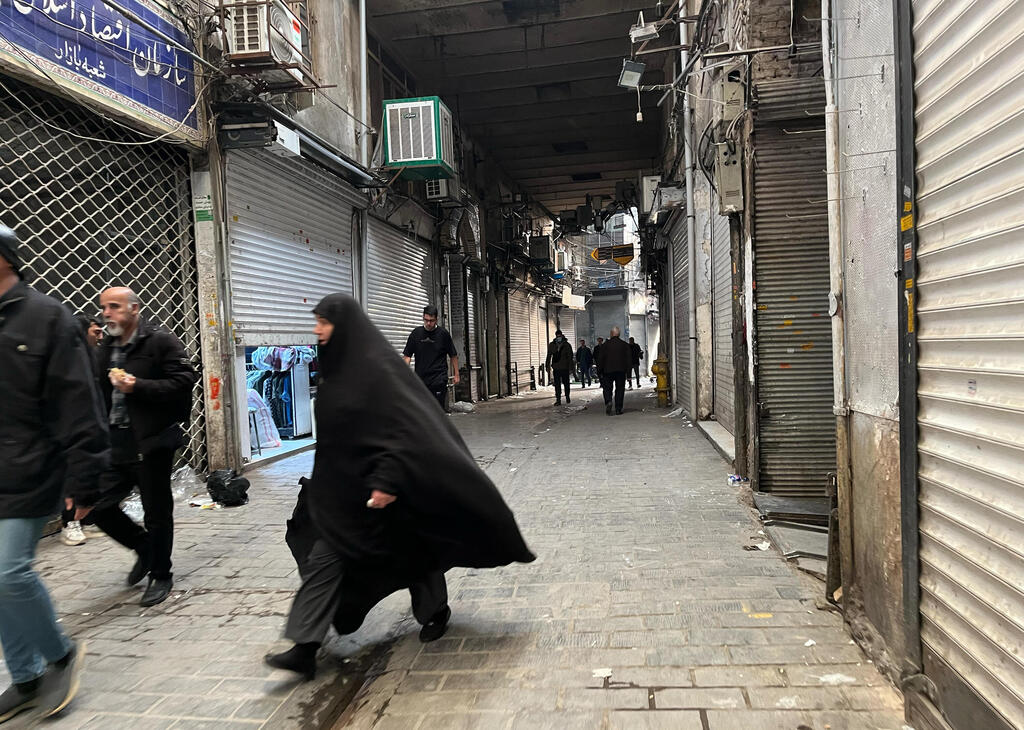
(Photo: AP Photo/Vahid Salemi)
Shortly before the January protests, the Iranian website Rouydad 24 reported that food inflation had exceeded 66%, and presented a grim outlook. It wrote: “What we see today in economic and information societies is the erosion of the middle class, widespread despair, depression, rising suicide rates and the collapse of public confidence,” according to many economists, “this is only the beginning, and a severe winter lies ahead in Iran.”
That prediction came true a few weeks later, when the country’s currency’s devaluation against the US dollar crippled private businesses operating in a market controlled by state-linked entities, including networks linked to the IRGC. The widespread protests quickly escalated into nationwide demonstrations. The situation has continued, and the outbreak of the war—now several weeks old—has effectively extended that “brutal winter” into a wellspring of economic chaos.
Mahtab, a senior official at the central office in Tehran, said: “Prices are going up every day, and some food has increased by 70 to 80% since the war started.” Earning about 40 million tomans a month, he said he struggles to pay for food and housing expenses. During the Nowruz holiday, which often includes travel with extended family, gatherings were limited to close relatives due to rising costs. As he was always afraid of missiles, bombs or drones hitting his house, he said that the worsening economic situation has made people lose their strength and may spark protests.
The government has pledged to increase workers’ salaries by 60%. Although officials say oil production and imports are continuing, further escalation of the war could deepen the budget deficit under wartime conditions at a time when the government is already under pressure to expand aid to prevent renewed violence, which could pose a serious threat to its survival in the coming weeks.
4 Check out the gallery
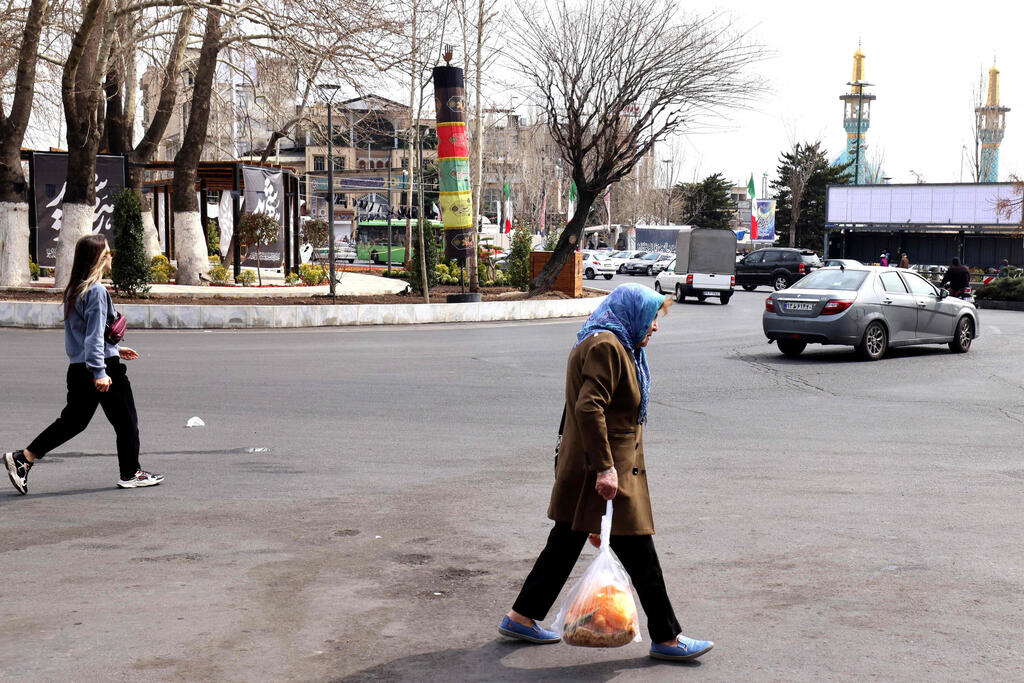
(Photo: ATTA KENARE / AFP)
Mahtab explained that during the war, prices rose before Nowruz, and the cost of food increased by 70% to 80% compared to before the war. “Some things like cooking oil have actually doubled in price,” he said, adding, “Every time we go to the store, we are surprised.” Many families relied on supplies such as pasta and canned tuna, but those stores have run out and cannot be used on a daily basis.
“Yesterday, I bought three loaves of bread, a few oranges, a tray of eggs and one bottle of milk—it cost 700,000 tomans ($4.6). If I want to buy meat, chicken, rice and oil tomorrow, I will have to spend half of my monthly income.” Mahtab added, as the sound of air defense could be heard in the background.
He said that Persian New Year travel has decreased because of the war and warned that prices may not drop even after the war ends. “Even if the war ends tomorrow, there is no guarantee that prices will go down.” The government’s efforts to insert dollars to keep the rate below 150,000 tomans has not reduced the cost of food.
Daily life has been severely disrupted, with the internet down, markets and industries mostly idle and panic rife. Every night we sleep in fear, wondering when it will be time for us to be shot by the spear.
-
This story was written by Omid Habibinia and reprinted with permission from The Media Line.
#Warweary #Iranians #midst #economic #downturn #anticipating #protests