The war in Iran has continued for almost four weeks without a clear end and with the price of oil above $100 a barrel, many Americans feel the impact when they fill up their car or get their heating bill.
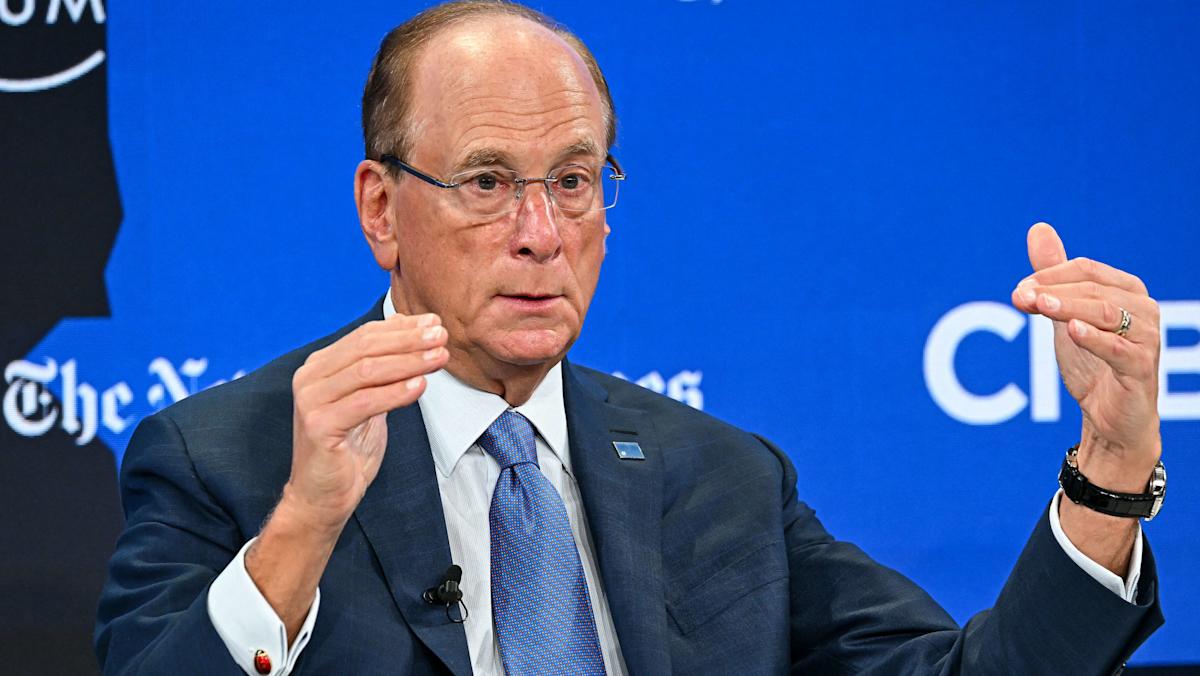
This week, Larry Fink, Chairman and CEO of BlackRock, shared his views on the Iran war and its impact on the world economy with the BBC.
When asked about his thoughts on the current conflict, Fink revealed that he sees it going one of two ways: a war that ends and lowers the price of oil or a war that continues with an unchanging regime that keeps oil prices high for years to come.
The national average for a gallon of regular gas has risen to nearly $4 according to AAA (1) – up more than a dollar in March alone and 27% over last year.
“I could paint a scenario where I saw, a year from now, oil at $40 a barrel,” Fink explained (2). “I could see it above $150. We have two very extreme results.” He went on to explain that there will be no result somewhere in the middle.
In the first scenario, the war would end and Iran would become part of the world community. They would reopen the Strait of Hormuz, release their oil and oil prices would drop.
Using the EIA’s rule that every $1 change in oil prices translates to about 2.4 cents per gallon at the pump (3), Fink’s $40-barrel scenario would mean gas prices drop to $2.40 — levels not seen since the pandemic subsided in early 2021.
The closure of the Strait of Hormuz, which transports 20% of the world’s oil supply, caused the biggest disruption in the history of the world oil market according to the International Energy Agency (4). Reopening this important road is the key to the solution of this conflict with the economy.
What it comes down to, according to Fink, is whether Iran can be accepted by the international community. “Can Iran be a country that participates in the world again? Can Iran be a country where they work peacefully side by side across the Persian Gulf and the GCC [Gulf Cooperation Council]?” he said: “That is one very big result.”
Fink admits that no one knows what will happen as he brings up a possible, albeit optimistic, view that there could be a promising outcome for the world economy if Iran becomes a recognized part of the world.
“If that outcome were to happen, you would put Iranian oil back on the market along with Venezuelan oil growth, and you could paint a picture where oil prices could be lower than they were before the Iran war.”
This would be the best situation for the world economy, including the United States.
Read More: 5 Important Investments You Can Make Once You’ve Saved $50,000
On the other hand is the second situation, where the war and / or the current regime would continue to directly affect oil prices and keep them high for years to come.
Fink warns that “if Iran wants to continue being a peddler of terror, then it’s a very different outcome.”
At $150 a barrel, the same figures suggest that gas prices could push over $5 a gallon across the country – an area only a few states like California and Hawaii have seen so far. Oil prices aren’t just hitting pump drivers, either. Diesel fuels the trucks that stock grocery shelves and the natural gas and gasoline that are key ingredients in fertilizer production. When energy costs rise, food prices tend to follow – and at $150 a barrel, that pressure would be felt on everything from eggs to bread.
“I would argue,” Fink explained, “that we could have years above $100, close to $150 oil with serious consequences for the economy. The interpretation of $40 oil is one of abundance and growth and the other is the result of perhaps a major recession and steepness.”
For millions of Americans watching their 401(k) balances, the numbers are personal. Prolonged economic downturns can lower portfolio values, while extreme conditions can boost market returns. Fink did not give any advice in the BBC interview on how to deal with the recession, but in his annual letter to investors released on March 23 (5), he said that “some strong market days have come amid uncertain headlines.”
He seems to recommend staying with your investments for the long term rather than reacting to the moment. “Over time, staying invested is more important than timing. Over the past twenty years, every dollar invested in the S&P 500 has grown more than eight times. You miss the best ten days, and you would have made less than half the money.”
Join 250,000+ readers and get the best Moneywise stories and exclusive interviews first – detailed information curated and delivered every week. Register now.
–
We rely only on vetted sources and reliable third-party reports. For details, see us editorial rules and guidelines.
AAA (1); BBC (2); US Energy Information Administration (3); International Energy Agency (4); BlackRock (5)
This article provides information only and should not be considered advice. Offered without warranty of any kind.